
Occupational Therapy: Your Guide to Function and Well-being

Occupational therapy is all about empowering individuals to participate in the 'occupations' – the everyday activities – that are meaningful to them. Whether it's getting dressed, going to school or work, enjoying hobbies, or connecting with loved ones, OTs work with people of all ages to overcome challenges and achieve their goals. They consider the whole person, looking at physical, mental, social, and environmental factors to create personalised strategies. The core belief is that engaging in these meaningful activities is fundamental to our overall health and well-being.
The Benefits of Occupational Therapy
The impact of occupational therapy is far-reaching, touching many aspects of a person's life. Here are just a few of the incredible benefits:
• Boosting Independence: OTs help people find easier ways to do daily tasks, often by adapting activities, suggesting helpful tools, or modifying their surroundings [4]. This means greater confidence and self-sufficiency in everything from personal care to work and leisure.
• Enhancing Quality of Life: By enabling participation in activities that bring joy and purpose, OT helps individuals lead more fulfilling lives, contributing to a better overall quality of life.
• Supporting Recovery: For those recovering from injury, illness, or living with a disability, OTs are key players in rehabilitation, helping to regain lost physical and cognitive functions.
• Pain Management: Occupational therapy can provide practical strategies for managing pain, allowing individuals to engage in activities with less discomfort.
• Nurturing Child Development: For our younger Australians, OT supports the development of crucial motor skills, sensory processing, and social interaction, helping them thrive at school and in social settings.
• Mental Health and Well-being: OTs address how mental health conditions can affect daily function, assisting clients with organising tasks, developing routines, improving social skills, and engaging in meaningful activities. They're brilliant at helping manage stress, anxiety, and other psychological barriers to participation.
OT and Psychology: A Dynamic Duo
Occupational therapy and psychology both aim to improve human well-being, but they approach this goal from slightly different, yet complementary, angles. Let's explore their connections.
Shared Ground:
• Focus on Human Functioning: Both professions are deeply concerned with how individuals function in their daily lives, albeit through different lenses.
• Holistic Perspective: OTs and psychologists often take a holistic view, recognising that physical, mental, and social factors are all interconnected and influence a person's health.
• Client-Centred Care: At the heart of both disciplines is a commitment to tailoring support to the individual's unique needs, goals, and values.
• Evidence-Based Practice: Both fields rely on research and evidence to guide their interventions, ensuring effective and high-quality care.
Where They Differ:
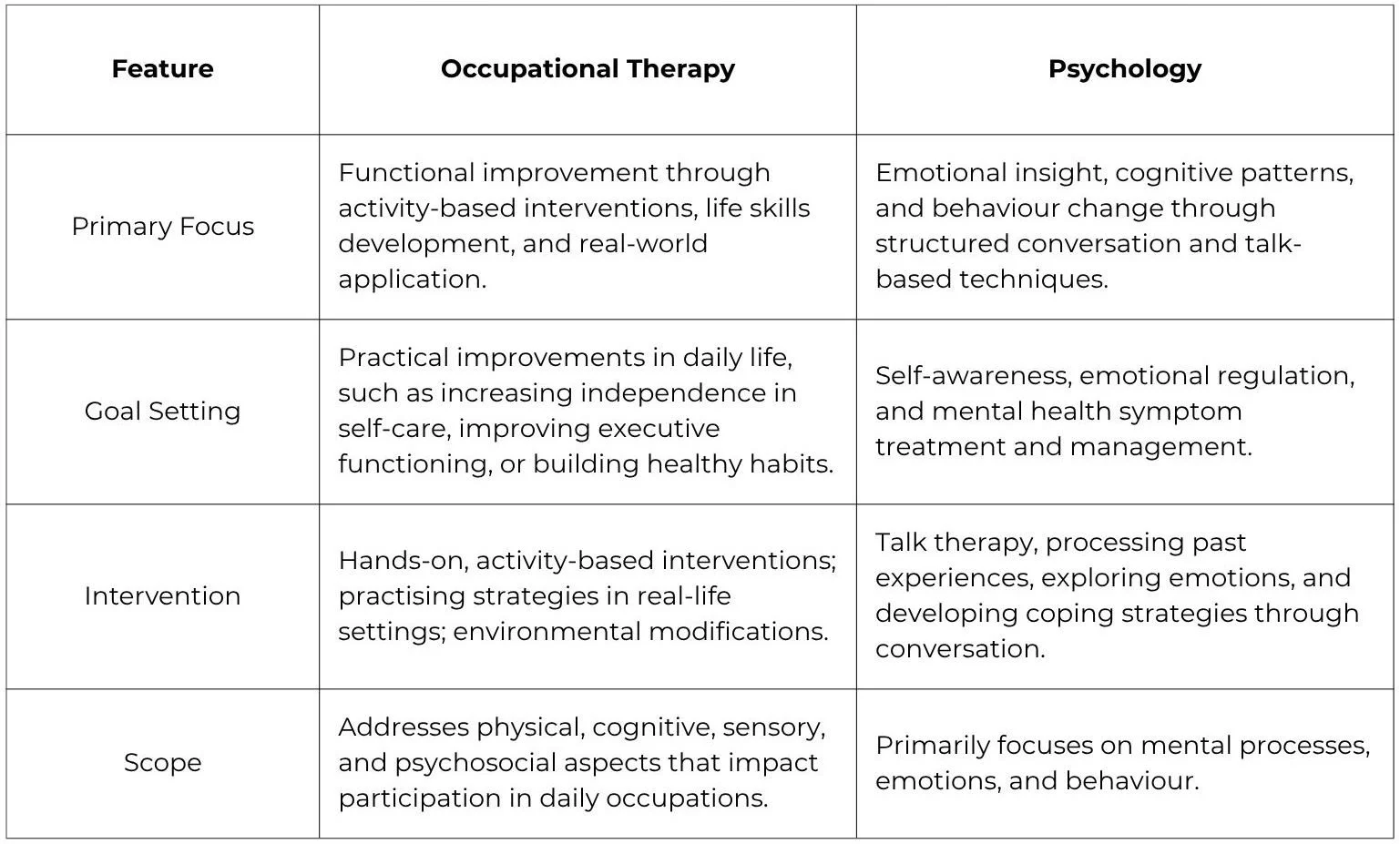
How OT and Psychology Work Hand-in-Hand
Occupational therapy and psychology are a powerful team, each enhancing the other's ability to provide truly comprehensive care. Psychology often lays the groundwork by helping us understand mental processes, emotions, and behaviours. OT then takes that understanding and translates it into practical, real-world actions.
For example, a psychologist might help someone understand the causes of their anxiety and develop coping mechanisms through talk therapy. An occupational therapist would then step in to help that person apply those coping mechanisms in their daily life – perhaps managing anxiety during work tasks, social outings, or even just going to the shops. OTs are brilliant at bridging the gap between therapeutic insights and their practical application in everyday living.
Many OTs in Australia receive training in psychological principles and therapeutic techniques like Cognitive Behavioural Therapy (CBT) and Mindfulness-Based Approaches. This allows them to address psychological barriers within an occupation-based framework. This integrated approach means OTs can help individuals not only understand their mental health challenges but also actively develop the skills and strategies needed to overcome them and participate fully in their desired activities.
Conversely, a background in occupational therapy can offer psychologists a unique perspective, helping them consider how functional abilities and self-regulation relate to a client's daily life. The collaboration between OTs and psychologists ensures a more holistic and effective approach to mental health care, addressing both the inner psychological world and the outer functional realities of an individual's life.
Occupational Therapy and NDIS
In Australia, occupational therapy plays a significant and often crucial role within the National Disability Insurance Scheme (NDIS). The NDIS is designed to support Australians with a permanent and significant disability, providing funding for 'reasonable and necessary' supports to help participants achieve their goals and enhance their quality of life.
Occupational therapists work closely with NDIS participants to assess their individual needs, create tailored intervention plans, and assist them in achieving their goals. This might involve:
• Developing Skills: Helping participants learn new ways to perform everyday tasks, build social skills, or develop vocational skills.
• Environmental Modifications: Recommending changes at home or in the community to improve accessibility and safety, such as grab rails or ramps.
• Assistive Technology: Recommending and providing training for assistive equipment and tools, like mobility aids or adaptive utensils, to boost independence.
• Sensory Regulation Strategies: Supporting participants with sensory processing difficulties through tailored interventions.
OT services can be funded under an NDIS plan. This ensures that participants receive the necessary support to develop skills for independence and improve their functional abilities. OTs are dedicated to helping NDIS participants lead more independent and fulfilling lives by improving their quality of life and enabling them to actively engage in their communities. If you want to learn more, and to see recent updates, visit https://www.ndis.gov.au/
Occupational therapy is a truly dynamic and essential health profession that empowers individuals to live rich and meaningful lives by enabling participation in their chosen occupations. Its benefits are extensive, from boosting independence and quality of life to supporting recovery and mental well-being. While distinct from psychology in its hands-on, functional approach, OT beautifully complements psychological interventions by providing practical, activity-based strategies that turn therapeutic insights into real-world skills. Together, occupational therapy and psychology offer a powerful, integrated approach to health, fostering resilience, independence, and overall well-being for all Australians.
If you or your loved one are ready to get support, contact our psychology clinic in Tweed Heads, where our services are available for children, teens, adults, couples and families. Often the first step is the hardest, but Brain Care is here to support you through the rest of your journey.