
The 5 Brain Waves
Your brain is a symphony of electrical activity, constantly communicating through brain waves. Whether you are in a state of deep sleep or focused on a complex task, the balance of these frequencies determines your mental state, emotional resilience, and cognitive performance. When brain waves become dysregulated, it can manifest as chronic stress, poor sleep, or difficulty concentrating.
Brain waves are rhythmic patterns of electrical activity produced by neurons communicating within the brain. These electrical signals reflect the brain's ongoing activity and are essential for regulating cognitive processes, emotional responses, sensory perception, and physical movement. Brain waves are classified into five primary frequency bands: delta, theta, alpha, beta, and gamma, each of which is associated with different states of consciousness and mental functioning, such as deep sleep, relaxation, focused attention, and complex information processing.
Types of Brain Waves
Delta waves are the slowest brain waves, occurring primarily during deep, dreamless sleep and periods of intense physical healing. They are the foundation of our body’s restorative processes and the gateway to the subconscious. However, delta wave dysregulation can severely compromise our recovery and vitality. Excessive delta activity during the day is often associated with learning disabilities, severe brain fog, or an inability to process information effectively. Conversely, a lack of delta activity during sleep prevents the body and brain from fully regenerating, leading to chronic fatigue, weakened immunity, and accelerated aging. Ensuring healthy delta rhythms is crucial for deep restorative sleep and long-term cognitive health.
Theta waves are the frequencies of our deep relaxation and subconscious mind, most active during meditation, light sleep, and moments of profound creativity. However, theta wave dysregulation can significantly impact emotional and cognitive stability. An excess of theta activity during waking hours is often linked to ADHD, distractibility, and "brain fog," where the mind feels perpetually unfocused or prone to daydreaming. On the other hand, a deficiency in theta activity can leave an individual unable to truly relax, leading to chronic stress, poor emotional processing, and sleep disturbances. Balancing theta activity is essential for accessing creative insight and maintaining a calm, centered nervous system.
Alpha waves act as the brain's internal bridge between the conscious and subconscious minds, typically promoting a state of calm alertness and creative flow. When alpha wave dysregulation occurs, it can significantly disrupt brain function. An under-production of alpha activity often leaves the nervous system stuck in a state of hyper-arousal, leading to chronic anxiety, tension, and sleep disturbances. Conversely, excessive alpha activity in certain regions can result in "brain fog," lack of motivation, or persistent feelings of low mood. Achieving the right balance of alpha activity is essential for maintaining emotional resilience and mental clarity.
Beta waves are the frequencies of our waking consciousness, dominating when we are alert, attentive, and engaged in logical thinking or problem-solving. However, beta wave dysregulation is a common driver of modern mental fatigue. When beta activity is chronically elevated—often referred to as "high beta"—the brain remains in a state of constant emergency, leading to persistent anxiety, racing thoughts, and physical tension. Conversely, insufficient beta activity can manifest as ADHD-like symptoms, such as difficulty sustaining attention, lethargy, or a lack of mental "get-up-and-go." Regulating beta waves is vital for achieving a state of focused productivity without the burnout of over-arousal.
Gamma waves are the highest frequency brain waves, often associated with peak cognitive functioning, high-level information processing, and "aha!" moments of insight. When gamma wave dysregulation occurs, it can profoundly impact how we perceive and process the world. A deficiency in gamma activity is frequently linked to cognitive decline, memory issues, and difficulties with learning or focus. On the other hand, excessive gamma activity can sometimes lead to sensory overload, hyper-vigilance, or feelings of mental over-stimulation. Maintaining optimal gamma synchrony is key to unlocking mental sharpness, heightened awareness, and integrated cognitive performance.
Here are the human brain waves and their function at a glance:
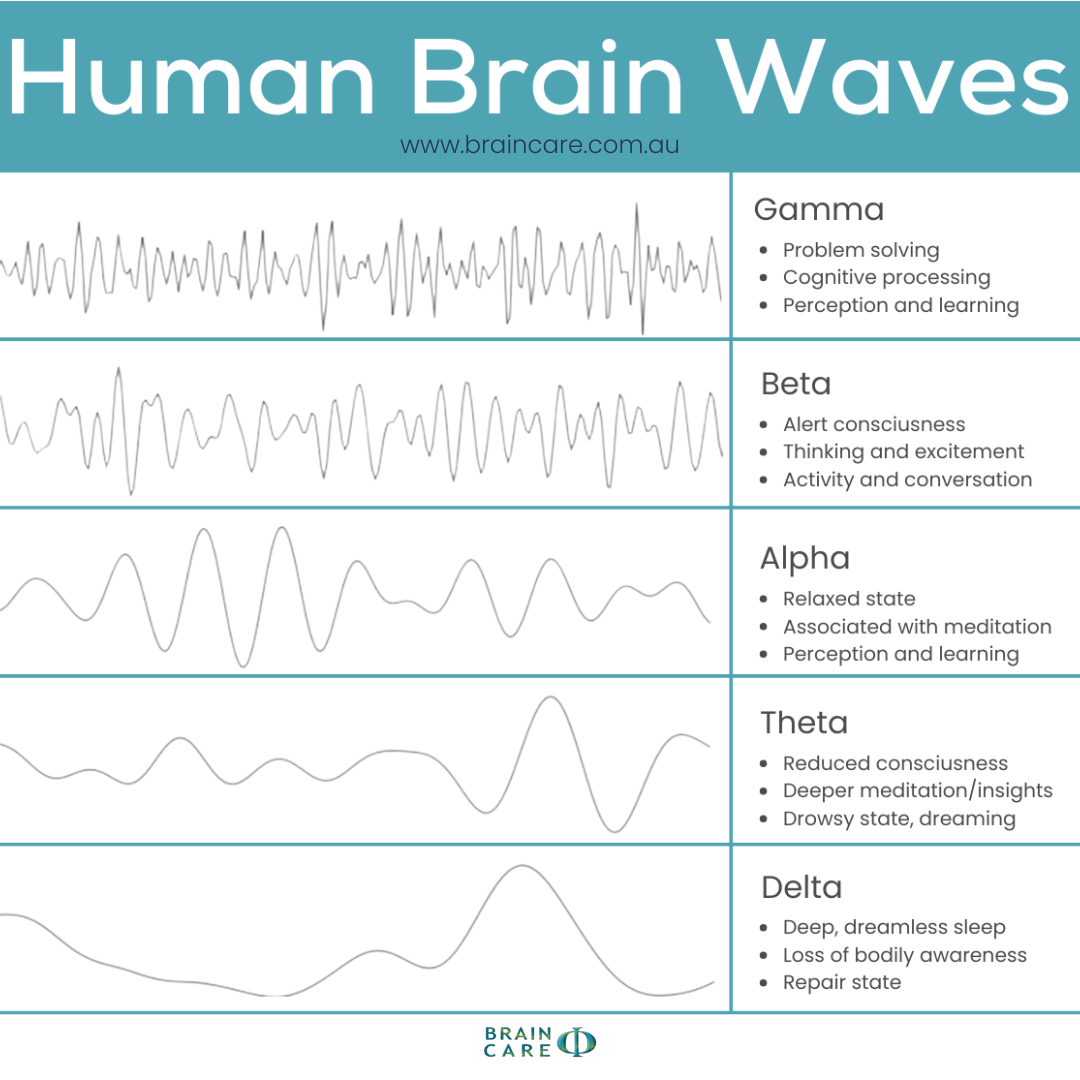
Human Brain Waves
Brain Waves Measurement
Brain wave activity is most commonly measured using electroencephalography (EEG), a non-invasive technique that records electrical signals through electrodes placed on the scalp. EEG provides valuable information about the timing and frequency of neural activity across all brain lobes, and is widely used in clinical diagnosis, neuroscience research, and neurofeedback interventions.
When brain wave patterns become dysregulated, normal brain function can be disrupted, potentially affecting attention, memory, emotional regulation, sleep quality, and executive functioning. These disrupted patterns have been associated with a range of neurological and psychological conditions, including epilepsy, attention-deficit/hyperactivity disorder (ADHD), autism spectrum disorder (ASD), anxiety, depression, and traumatic brain injury. Understanding brain waves and their regulation is therefore essential for advancing the assessment, diagnosis, and treatment of disorders that impact everyday functioning and overall quality of life.
Brain Mapping in Tweed Heads, Gold Coast and the Northern Rivers
At Brain Care, we take the guesswork out of brain health. Using qEEG (quantitative Electroencephalography), we create a precise map of your brain's unique patterns to see exactly how your nervous system is functioning. To help restore balance, we utilise Neurofeedback therapy as well as Photobiomodulation (PBM)—an innovative approach that uses specific wavelengths of light to stimulate and regulate brain activity. For a more holistic approach, we combine these brain-based therapies with psychology and counselling interventions.
If you or your loved one is experiencing mental health challenges and are ready to get support, contact our psychology clinic in Tweed Heads, where counselling is available for children, teens, adults, couples and families.
Curious about what your brain waves are telling you? We offer a free 30-minute discovery call to support you with questions about how a qEEG assessment may support the improvement of your brain function.
Contact us today to start your journey. Train your brain, change your life.